US-India Trade Deal Seals Diplomatic Breakthrough as Tariffs Fall

U.S. and India Seal Trade Deal After Months of Diplomatic Tensions
The United States and India finalized a comprehensive trade agreement on February 3, 2026, marking a significant diplomatic breakthrough after months of escalating tariff disputes. President Donald Trump announced the deal following a phone call with Prime Minister Narendra Modi, describing the agreement as driven by "friendship and respect." The accord effectively immediately resolves trade tensions that had threatened bilateral relations during Trump's second term.
Key Agreement Terms
Under the agreement, the U.S. reduced reciprocal tariffs on Indian exports from 25% to 18%, providing New Delhi with a competitive advantage over China, which faces 34% tariffs. Additionally, Washington dropped a separate 25% penalty tariff previously imposed on Indian imports due to crude oil purchases from Russia. India committed to ceasing Russian oil purchases and buying approximately $500 billion in American energy, technology, agricultural, and coal products over time.
Strategic Implications
The deal strengthens U.S.-India economic ties while addressing geopolitical concerns regarding Russian energy dependence. Both nations agreed to reduce tariffs and non-tariff barriers, facilitating increased bilateral trade and investment. This agreement signals renewed cooperation between Washington and New Delhi.
```About the People Mentioned
Donald Trump
Donald John Trump, born June 14, 1946, in Queens, New York, is an American businessman, media personality, and politician. He graduated from the University of Pennsylvania’s Wharton School in 1968 with a degree in economics. In 1971, he took over his family’s real estate business, renaming it the Trump Organization, through which he expanded into building and managing skyscrapers, hotels, casinos, and golf courses. Trump gained widespread fame as the host of the reality TV show *The Apprentice* from 2004 to 2015, which helped establish his public persona as a successful entrepreneur. Trump entered politics as a Republican and was elected the 45th president of the United States, serving from 2017 to 2021. His presidency was marked by significant policy actions including tax cuts, deregulation, the appointment of three Supreme Court justices, renegotiation of trade agreements (notably replacing NAFTA with the USMCA), and a focus on immigration control including border wall expansion. He withdrew the U.S. from international agreements such as the Paris Climate Accord and the Iran nuclear deal, and engaged in a trade war with China. His administration’s response to the COVID-19 pandemic was criticized for downplaying the virus’s severity. Trump was impeached twice by the House of Representatives—first in 2019 for abuse of power and obstruction, and again in 2021 for incitement of insurrection—but was acquitted by the Senate both times. After losing the 2020 election to Joe Biden, Trump challenged the results, culminating in the January 6, 2021, Capitol riot. He remains a central figure in American politics, having won the 2024 presidential election and returned as the 47th president in 2025, continuing to promote policies aimed at economic growth, border security, and military strength[1][2][3][4].
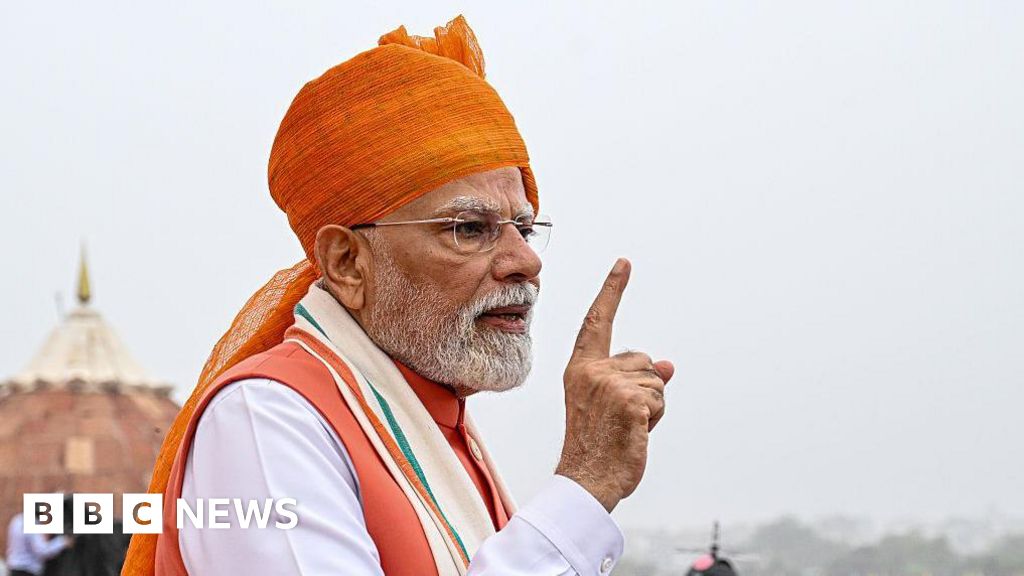
Narendra Modi
Narendra Damodardas Modi, born September 17, 1950, in Vadnagar, Gujarat, is the current Prime Minister of India and a leading figure in the country’s political landscape[1][4]. He is the first Indian prime minister born after India’s independence in 1947[5][7]. Modi’s early life was marked by modest beginnings in a lower-middle-class family, and he became involved with the Rashtriya Swayamsevak Sangh (RSS), a right-wing Hindu nationalist organization, at a young age[2][4]. His political career began in earnest when he joined the Bharatiya Janata Party (BJP) in the 1980s, rising through its ranks due to his organizational skills and grassroots appeal[2][4]. Modi’s first major political role was as Chief Minister of Gujarat from 2001 to 2014, where he was known for pro-business policies and infrastructure development, though his tenure was also controversial due to the 2002 Gujarat riots, for which he faced criticism but was later cleared by a Supreme Court-appointed investigation[4]. In 2014, Modi led the BJP to a decisive national victory, becoming Prime Minister and ending a long period of coalition governments[1][2]. He was re-elected in 2019 and again in 2024, making him one of India’s longest-serving prime ministers and the first outside the Indian National Congress to achieve such longevity[4][2]. As Prime Minister, Modi has pursued sweeping economic reforms, including the introduction of the Goods and Services Tax (GST) to simplify India’s tax system and the demonetization of high-value currency notes to combat corruption[1][6]. He has launched initiatives like “Make in India” to boost manufacturing, “Digital India” to expand internet access, and “Atmanirbhar Bharat” (Self-Reliant India) to reduce import dependency, especially after the COVID-19 pandemic[6]. His government has also implemented large-scale welfare programs such as Ayushman Bharat (health insurance for the poor), Pradhan Mantri Jan Dhan Yojana (financial inclusion), and Ujjwala Yojana (clean cooking fuel for rural households)[5]. Modi’s tenure has seen a marked shift in India’s foreign policy, with increased global engagement, strategic partnerships, and advocacy for a permanent UN Security Council seat[3]. Domestically, his leadership has been associated with a rise in Hindu nationalist sentiment and policies appealing to the Hindu majority[1]. While his economic reforms have expanded the tax base and modernized infrastructure, critics point to challenges such as unemployment and rising living costs[1]. Modi remains a central and polarizing figure in Indian politics, with his policies and persona continuing to shape the nation’s direction into the mid-2020s[2][4].