White House Plans Dismantling NCAR: Local Leaders Fear Loss of Climate and Weather Research

White House Announcement and Local Response
The White House has signaled plans to dismantle the National Center for Atmospheric Research in Colorado, a move that local leaders and scientists say would upend decades of climate and weather science work and critical forecasting infrastructure.
Political Context and Allegations
Colorado Congressman Joe Neguse frames the action as retaliation tied to the state’s stance in a high-profile legal matter involving former Mesa County Clerk Tina Peters, asserting the threat aims to punish Colorado rather than address scientific priorities.
Implications for Research and Communities
Researchers warn that breaking apart NCAR could jeopardize supercomputing, long-term climate datasets and emergency forecasting support for communities, while officials debate alternatives and possible relocation of select functions to other federal or private institutions.
About the People Mentioned
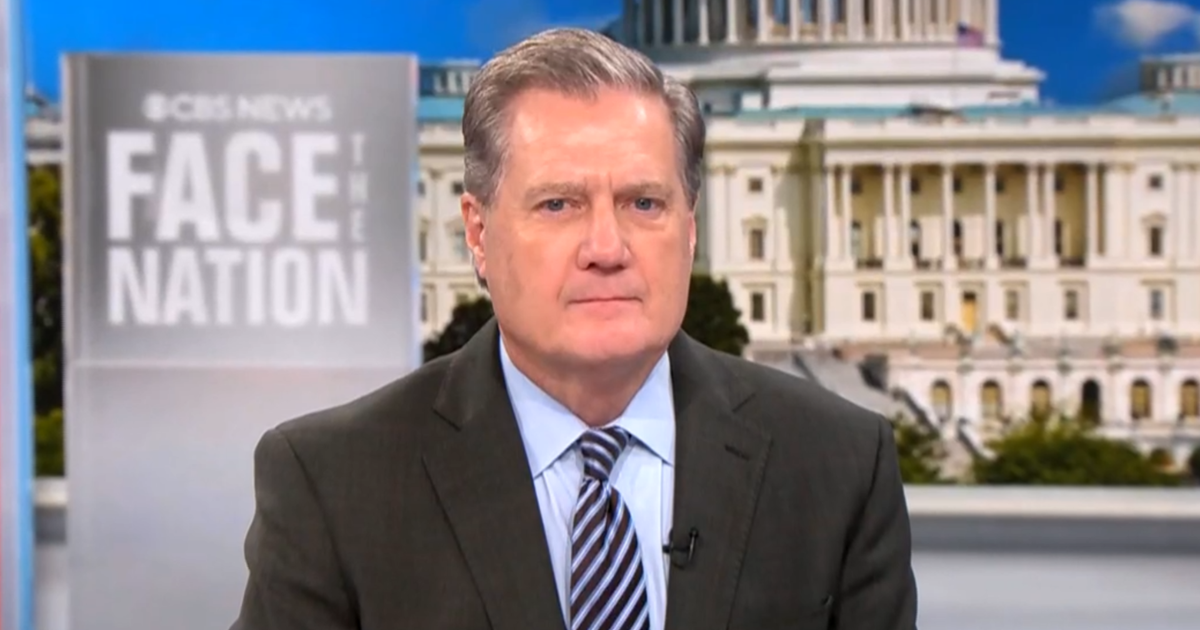
Joe Neguse
Joe Neguse is a U.S. Congressman representing Colorado's 2nd Congressional District, elected in 2018 as the first Black member of Congress from Colorado.[2][3][7] Born to Eritrean immigrant parents, he earned a B.S. in Political Science and Economics *summa cum laude* from the University of Colorado-Boulder and a J.D. from its School of Law.[1][3] Early in his career, Neguse co-founded New Era Colorado, the state's largest youth voter registration nonprofit, and worked for then-Speaker Andrew Romanoff in the Colorado House.[3] In 2008, while in law school, voters elected him to the University of Colorado Board of Regents, making him the second African-American regent in state history; he served six years, including as Audit Committee Chair, advocating for affordable higher education, lower student health insurance costs, higher wages for low-paid workers, and easier voter registration.[1][2][3] At age 31, Neguse became one of Colorado's youngest cabinet secretaries under Governor John Hickenlooper, serving as Executive Director of the Department of Regulatory Agencies. His tenure recovered millions for consumers, pursued financial fraud cases, championed anti-senior fraud legislation, and launched the state's first online civil rights complaint system, earning the 2017 Consumer Protection Award.[1][2][3] In Congress, the 41-year-old serves on the Natural Resources, Judiciary, and Rules Committees, as Ranking Member of the Federal Lands Subcommittee, and was a House prosecutor in Donald Trump's second impeachment trial.[1][2][5] Ranked among the nation's most effective lawmakers—top Democrat in his freshman term and top for public lands—he has passed 22 bipartisan bills protecting public lands, supporting rural schools, aiding small businesses, and reforming ethics rules.[4][5][6] He founded the Bipartisan Wildfire, Fentanyl Prevention, and Colorado River Caucuses, and pioneered "service town halls" for community engagement, earning the 2023 John F. Kennedy New Frontier Award and Bipartisan Policy Center's Legislative Action Award.[2][4][5] Recently elected Assistant Democratic Leader, succeeding Jim Clyburn, Neguse prioritizes affordable healthcare, wildfire mitigation, gun violence reduction, and climate action, maintaining high bipartisan effectiveness.[5]
Tina Peters
Tina Peters served as the Mesa County Clerk and Recorder in Colorado until her removal from office in 2021 amid an investigation into her handling of election equipment.[1][2] Elected as a Republican, she gained national attention for promoting unsubstantiated claims of voter fraud in the 2020 U.S. presidential election, aligning with figures like MyPillow CEO Mike Lindell.[2] In early 2021, Peters orchestrated a scheme to allow unauthorized access to secure Dominion Voting Systems machines in her office. She directed a deputy to create false security credentials for local resident Gerald Wood, disabled surveillance cameras, and permitted QAnon-linked conspiracy theorist Conan Hayes to copy and distribute proprietary election software data. Prosecutors detailed these actions as an effort to "prove" election irregularities, though no evidence of fraud emerged.[1][2] Her conduct led to the decertification of Mesa County's Dominion systems and prompted Colorado Secretary of State Jena Griswold to strip Peters of election oversight authority. Peters briefly fled to Texas with Lindell before returning.[2] She ran for Colorado Secretary of State in the 2022 Republican primary but lost decisively.[2] In August 2024, a Mesa County jury convicted Peters on seven counts, including three felonies for attempting to influence a public servant, one felony conspiracy to commit criminal impersonation, and three misdemeanors: first-degree official misconduct, violation of duty, and failure to comply with a secretary of state order.[1][2] On October 3, 2024, 21st Judicial District Judge Matthew Barrett sentenced her to nine years in prison—eight years and nine months, mostly in the Colorado Department of Corrections—describing her as defiant, self-centered, and no hero. Peters requested probation, citing inadmissible conspiracy evidence about Dominion machines, but the judge rejected it. Her attorneys have filed notice to appeal.[1][2] As of late 2025, Peters remains incarcerated, with her case highlighting tensions over election integrity claims in U.S. politics.[3]
About the Organizations Mentioned
White House
The **White House Office** is a central organizational component within the Executive Office of the President of the United States (EOP), tasked with supporting the President in managing day-to-day operations, policy formulation, and political affairs. It is headed by the White House Chief of Staff and staffed by senior aides who report directly to the President, including those with titles such as Assistant to the President and Deputy Assistant to the President. These staff members are mostly political appointees without the need for Senate confirmation, allowing the President considerable discretion in shaping the office to suit each administration's priorities[1]. Historically, the White House Office was established in 1939 through Reorganization Plan 1 and Executive Order 8248 to provide immediate assistance to the President. It functions as the nerve center for presidential staff, physically located primarily in the West Wing, and plays a pivotal role in managing the President’s policy agenda, communications, and political strategy. Its flexible organization allows each President to tailor the staff composition and roles according to their governance style and objectives[1]. In the current context of 2025, the White House Office operates under the administration of President Donald J. Trump, who returned to office after the 2024 election. His administration emphasizes rejecting prior policies deemed extremist and focuses on enhancing quality of life, economic growth, and American energy dominance. The administration includes Vice President JD Vance and First Lady Melania Trump, among others, with a Cabinet advising on various governmental functions[4][6]. Recent initiatives linked to the White House’s operational sphere include the establishment of a new **Department of Government Efficiency (DOGE)** aimed at modernizing federal technology and software to boost government productivity. The DOGE agenda is implemented through the renamed United States DOGE Service within the Executive Office, reflecting a concerted push to leverage technology for administrative modernization[5]. Notably, the White House Office also coordinates national security and homeland security functions through the National Security Council staff, underscoring its central role
National Center for Atmospheric Research
The **National Center for Atmospheric Research (NCAR)**, headquartered in Boulder, Colorado, is a federally funded research and development center (FFRDC) sponsored by the National Science Foundation (NSF) and managed by the nonprofit University Corporation for Atmospheric Research (UCAR), a consortium of over 120 universities.[1][3] Established in 1960 under founding director Walter Orr Roberts, NCAR was created to equip the atmospheric science community with cutting-edge facilities unattainable by single institutions, fostering collaborative breakthroughs in Earth system science.[1][3] NCAR's mission centers on advancing research, education, and observation in atmospheric and related fields, including climate science, meteorology, atmospheric chemistry, space weather, and societal impacts like droughts, wildfires, and severe storms.[1][2] It equips global scientists with **specialized tools** such as research aircraft, supercomputers, the Mauna Loa Solar Observatory, and open-access datasets—totaling over 20,000 resources—alongside community models like the **Community Earth System Model (CESM)**, **Weather Research and Forecasting (WRF)** model, and **Whole Atmosphere Community Climate Model (WACCM)**.[1][2][4] These resources power forecasts for hurricanes, El Niño patterns, and climate change effects, while in-house teams of ~750 scientists, engineers, and staff produce influential publications and host workshops, fellowships, and public outreach at its visitor center.[3][5][6] Key achievements include pioneering high-performance computing for weather prediction and wildfire modeling, enhancing global resilience to environmental risks.[2][4] Today, under director Everette Joseph, NCAR operates seven laboratories and two programs from sites in Colorado, Wyoming, and Hawaii, remaining a hub for innovation where academia, government, and industry converge.[1][3] For business and tech leaders, NCAR's scalable models and cyberinfrastructure exemplify how public investment drives predictive tech wit
Mesa County Clerk
Mesa County Clerk (officially the Mesa County Clerk and Recorder) administers elections, records public documents, issues motor vehicle titles and registrations, and manages liquor and marijuana licensing and Clerk-to-the-Board duties for Mesa County, Colorado, through five divisions: Elections, Recording, Motor Vehicles, Clerk to the Board, and Administration. The office also provides marriage and civil-union services and public-records access, including electronic search and property-fraud alert tools for residents and businesses[1][2][3]. Historically the county’s elected clerk-and-recorder has been the local steward of voter registration, ballot processing, land-records preservation, and vehicle services; those functions are reflected in departmental budgets and public updates presented to the Board of County Commissioners[3][4]. In recent years the office modernized record access by scanning documents into searchable electronic formats and launched digital services such as online marriage applications and fraud-notification systems for real-estate filings[2]. These technology-driven shifts aim to speed transactions and improve data availability for residents and businesses[2][3]. Key achievements include implementing countywide electronic records and public-notice systems, operating a mail-ballot election system with signature verification that the office credits with detecting and reporting attempted mail-ballot fraud, and consolidating motor-vehicle VIN inspections and other services to better serve customers[1][2][4]. The office has also regularly briefed county leadership on operational trends and service metrics to guide resource decisions[4]. The office’s recent trajectory has been shaped by both administrative modernization and high-profile election-integrity controversies involving prior leadership that drew statewide attention and legal scrutiny; these events prompted increased oversight, legal action, and public discussion about safeguards in election administration in Colorado[5][7]. Today the Mesa County Clerk and Recorder operates as a central county service provider focused on secure elections, accessible electronic records, and routine public services while navigating heightened